You Don't Need to Be a Paramedic to Save Someone's Life
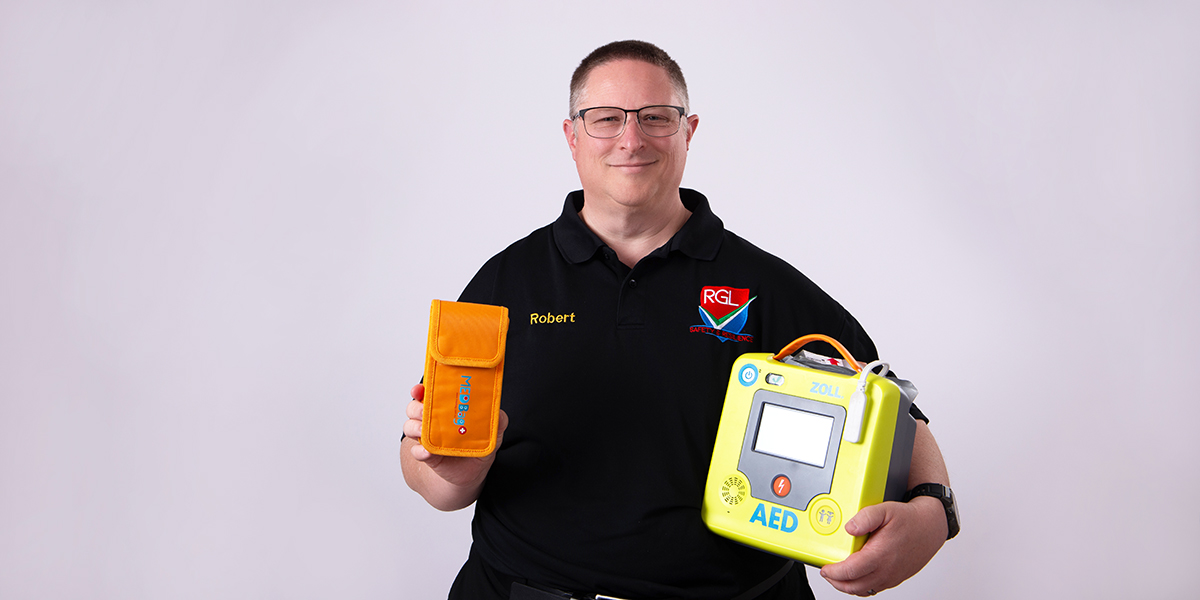
Restart a Heart Day, 16th October each year, is a timely reminder.
Every year, around 30,000 people suffer a cardiac arrest outside of hospital in the UK. Fewer than one in ten survive. Not because the treatment doesn’t exist but because, in most cases, nobody nearby knew what to do.
That’s not a medical problem. It’s a training problem. And it’s one we can fix.
The first three minutes matter more than anything else
When someone’s heart stops, the clock starts immediately. Every minute without CPR reduces survival chances by around 10%. The average ambulance response time in the UK is eight to ten minutes. Which means that by the time the paramedics arrive, the outcome may already have been decided - by whoever was standing in the room when it happened.
That person doesn’t need to be a doctor. They don’t need years of training or a medical degree. They need to know two things: how to start chest compressions, and where the nearest defibrillator is.
That’s it. That’s the difference.
The poster on the wall is a start but only a start
Many workplaces now have an AED - an automated external defibrillator - on the premises. That’s genuinely good news. But a 2026 amendment to the British Standard for workplace first aid kits (BS 8599-1:2019+A1:2026) has sharpened the guidance considerably, and many businesses don’t yet know about it.
The standard introduces what’s known as the Two-Minute AED Rule. In any workplace where five or more people are present - including employees, visitors, contractors, and customers - an AED should be retrievable and ready to use within two minutes from any location on the premises. The standard breaks this down further: one minute to locate and collect the device, and one minute to prepare it and deliver the first shock. That’s a tight window. And it means that a single AED mounted by the main entrance of a large or multi-storey building almost certainly doesn’t meet it.
An AED in a cupboard that nobody knows about, or a poster on the wall that nobody has ever read, won’t save anyone. The standard exists to make that point concrete.
CPR isn’t as complicated as you think
This is the part that stops most people. The fear of doing it wrong. Of making things worse. Of not being qualified enough to act.
Here’s the truth: you will not make things worse. A person in cardiac arrest has no heartbeat. Your compressions - hard, fast, in the centre of the chest, at roughly the pace of Stayin’ Alive by the Bee Gees - are the only thing keeping blood moving to their brain until the ambulance arrives. Hands-only CPR, with no rescue breaths required, is what the Resuscitation Council UK recommends for untrained bystanders. Modern AEDs talk you through every step and will not deliver a shock unless the heart rhythm requires it.
The barriers that hold people back - fear of liability, fear of breaking ribs, fear of getting it wrong - are understandable. But they are not good reasons to stand still.
What a genuinely prepared workplace looks like
It’s simpler than most people assume but it does require some thought, particularly on AED placement.
Start by timing the walking route from the furthest corner of your premises to wherever the AED is currently located. If that round trip takes more than two minutes, the device isn’t where it needs to be. Larger sites and multi-storey buildings will often need more than one unit. The AED itself should be wall-mounted or in an unlocked cabinet, clearly visible, with directional signage that makes it findable without prior knowledge of the building. It should be included in staff inductions, not filed away in the health and safety manual that nobody reads.
Beyond placement, a prepared workplace also has a clearly displayed emergency poster showing who the first aiders are and the basic CPR steps. It has at least one trained first aider on site at all times. And it has a team that has, at some point, actually practised so that when the moment comes, the first thought isn’t “What do I do?” but “I know what to do.”
One further step worth taking: register your AED on The Circuit, the National Defibrillator Network (thecircuit.uk – insert hyperlink, new window). It means the device shows up when 999 call handlers are directing bystanders to the nearest AED, which could matter far beyond your own workforce.
A note on the standard itself: BS 8599-1 is a British Standard rather than statutory legislation, so there is no automatic legal penalty for non-compliance. However, following it is one of the clearest ways for employers to demonstrate they are meeting their duty of care under the Health and Safety (First-Aid) Regulations 1981. In the event of a workplace incident, it is exactly the kind of documented, considered approach that matters.
You don’t have to be a paramedic. You just have to be ready.
The people who save lives in cardiac arrest aren’t usually medical professionals. They’re colleagues, shop assistants, gym members and passers-by who happened to know what to do. People who, at some point, spent a day learning something they hoped they’d never need.
If that’s not you yet, it could be. CPR training takes one day. The skill lasts a lifetime. And on the day it matters, it will matter more than anything else you did that week. (If you’re not sure what First Aid provision your business needs, try our free calculator HERE
RGL Safety & Resilience delivers CPR and first aid training across Hampshire, led by qualified paramedics and NHS emergency professionals. We also offer an AED advisory service for businesses, schools, and community venues - including help with device selection, placement, and ensuring your provision meets current guidance. To find out more, get in touch - we’re always happy to start with a conversation.
Free downloads
Download our template AED Direction sign HERE or our wallet guide HERE
For more useful resources, try the Resus Council HERE